Posts Tagged emergency care
Trick of the Trade: Laryngoscope Lifting Strength
Posted by Michelle Lin, MD in Drugs and Treatments, Medical and Surgical Procedures, Tricks of the Trade on December 16th, 2009

You are about to endotracheally intubate a patient. As you struggle to elevate the laryngoscope more anteriorly, has your left hand ever trembled while trying to see the vocal cords? Before you say, “I think the cords are too anterior, hand me the [insert your favorite backup airway adjunct]“, let’s focus on some basics.
How can you gain significantly more laryngoscope lift strength? You can do more left arm bicep/tricep exercises, or…
Trick of the Trade
Hold the laryngoscope handle as close to the blade as possible.
Grabbing part of the blade helps to stabilize against the “waggling” of the handle. Furthermore, it is easier to pull exactly along the long-axis of the handle at this grip point. I would avoid holding the laryngoscope handle as shown in the image above. Is the physician intubating or holding a fragile cup of tea?
The most stabilizing larngyoscope grip
which provides maximal lift strength.
For other airway Tricks of the Trade, take a look an older post.
House Bill Includes Positives for EM
Posted by Angela Gardner, MD, FACEP in Health Care Reform on November 8th, 2009
I orginally posted this entry on my personal blog, Gardner’s Gate. Last night the U.S. House of Representatives passed a health reform bill, H.R. 3962. Emergency physicians are divided in their thoughts about the consequences of this legislation, as is the house of medicine and the country in general. However, there are many aspects of the bill that are positive for emergency patients and for emergency physicians.
Some of these include:
- Inclusion of emergency services as part of an essential health benefits package
- Statutory authorization of ECCC (Emergency Care Coordination Center) and ECCC Council of Emergency Medicine
- Health and Human services annual report to Congress on ECCC activities, with focus on emergency department crowding, boarding and delays in ED care following presentation
- Emergency care/trauma regionalization pilot project grants
- Trauma stabilization grants
- Health and Human Services incentive payments to states that establish medical liability reforms (Certificate of Merit/early offer)
- Health and Human Services demo project to reimburse private psychiatric hospitals that provide EMTALA services to Medicaid beneficiaries
The American College of Emergency Physicians has worked diligently to represent emergency physicians and emergency patients throughout this volatile process. As the process continues toward final legislation, ACEP will continue to focus on the needs of emergency patients, future emergency patients, and the physicians who care for them.
Senate to Consider Medicare Payment Fix – Make Sure Your Voice is Heard
Posted by Angela Gardner, MD, FACEP in Health Care Reform on October 19th, 2009
Starting this week, the Senate will take a series of critical votes on a bill, the Medicare Physicians Fairness Act of 2009 (S.1776), to abolish the flawed formula used to determine Medicare reimbursement rates. This bill is critically important to all physicians, but especially to emergency physicians who will undoubtedly see a significant increase in Medicare patients if scheduled payment cuts are enacted.
Under the current system, physicians are scheduled to receive drastic cuts to Medicare payments starting next year. Congress understands that the scheduled cuts would devastate access to care for seniors so each year they “patch” the system by voting at the last minute to cancel the funding cut. However, even though the cut is not enacted, the total accumulated debt for physician reimbursement under Medicare continues to grow. Picture it as a credit card with a huge balance and a high interest rate. Congress “forgives” a payment on the debt each year, but that amount is added to the balance, and interest continues to add up. Without action by Congress, physicians are scheduled to take a 21 percent reduction in reimbursement for Medicare patients next year, with cuts totaling 40 percent in future years.
Having health insurance coverage is not the same thing as having access to medical care. All seniors over age 65 are entitled to insurance under the Medicare program. Increasingly, however, primary care physicians and other specialists are refusing to take new Medicare patients because of low reimbursement rates. It’s not that those doctors lack compassion, it’s that many lose money on Medicare patients and a 40 percent cut in payments would make it impossible for them to continue to treat those individuals.
With an aging population, emergency departments already anticipate an increased volume of seniors needing care. If, however, Congress does not fix the flawed Medicare formula, that increase could be catastrophic. Seniors unable to find doctors accepting Medicare may have no choice but to seek care in emergency departments, which the Institute of Medicine already calls “dangerously overcrowded.”
Passage of this bill would help to prevent more crowding in emergency departments, provide a reasonable level of compensation to emergency physicians, and help attract on-call specialists. This is a non-partisan issue. Republicans and Democrats claim to care equally about ensuring access to care for seniors. If our elected representatives are sincere in these views, they will take a principled stand on this issue and support S.1776 now.
You can help assure passage of this critical legislation. Contact your two U.S. Senators now and tell them to support S. 1776. Here’s how:
- Call 1-800-833-6354 to be automatically connected to your two Senators. Urge them to support all procedural motions and final passage of S.1776.
- Go to ACEP’s Advocacy Center and send an e-mail urging your Senators to support S. 1776.
Now is the time to become involved. Pick up the phone and make that call. And check back here often for updates. Working together the emergency physician community can make a difference.
A Review of Obama’s Speech to the AMA
Posted by Ron Cunningham in Health Care Reform on June 16th, 2009

The AMA Section Council on Emergency Medicine
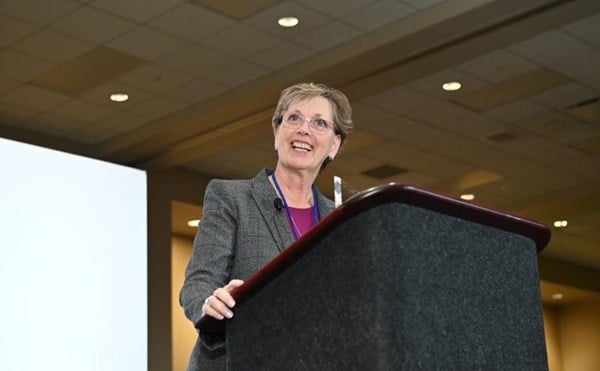
ACEP President Nick Jouriles shares his thoughts on President Obama’s speech to the AMA House of Delegates yesterday
President Obama was warmly received by the physicians at the AMA Annual Meeting earlier today. Like many in the crowd, I went with mixed feelings. Our current system is not sustainable, we all know that. But would he actually speak specifically to some- even one – of the critical issues in emergency medicine today? What are his plans, how will our issues be addressed, and where do we go from here?
For starters, the President told us that he is not trying to create a state run plan. “When you hear the naysayers claim that I’m trying to bring about government-run health care, know this–they are not telling the truth,” Mr. Obama emphasized.
But his plan does have a public component and includes: an emphasis on preventative care, widespread use of electronic health records, and changes in the health insurance industry including a new “exchange” where individuals and businesses can purchase a health plan. That “exchange” includes a government option.
Like many in the audience I was wondering about President Obama’s emphasis on wasteful spending in health care. He does not lay the blame at the foot of physicians, but the constant drumbeat coming from his administration on this issue is unsettling. Can inefficiencies be wrung from the system? Can we streamline some of our processes? Can things be done differently? Yes, yes and yes. But to the tune of hundreds of billions of dollars? I don’t see it. Most emergency physicians don’t see it, and neither will most Americans.
But then, he brought up an issue we can all agree on. I am encouraged that he is open to changes in the medical liability system. That was a position I had not expected from this Administration, and although he does not take a strong position, it is a start. President Obama said, “[W]hile I’m not advocating caps on malpractice awards which I believe can be unfair to people who’ve been wrongfully harmed, I do think we need to explore a range of ideas about how to put patient safety first, let doctors focus on practicing medicine, and encourage broader use of evidence-based guidelines. That’s how we can scale back the excessive defensive medicine reinforcing our current system of more treatment rather than better care.”
Like I said, a start.
We will also have to look long and hard at proposals affecting the physician payment system. In addressing the issue, Mr. Obama said, “We need to bundle payments so you aren’t paid for every single treatment you offer a patient with a chronic condition like diabetes, but instead are paid for how you treat the overall disease.”
How that plays out for emergency medicine will be key, but given our 25 year history with EMTALA, where many hospitals receive extra funds for indigent care while we do not , his emphasis on this is not a good sign.
Finally, it was disappointing not to hear emergency medicine mentioned specifically. We saw how our emergency departments were affected with the “worried well” of H1N1. And the New York Times published my letter to the editor addressing that point. But the White House has hit the mute button for now- or until the next epidemic or natural disaster occurs- regarding the crisis in emergency medicine.
It was a good speech and a good start. It was great to be in the audience. Now it’s time for Congress to get down to business and find solutions that we can all believe in. And time for the nation’s emergency physicians to stand up and make our voice heard. Our patients need us.