Posts Tagged ACEP
iPad and Medicine
Posted by Harvey Castro, MD in Informatics, Information Technology, Residency, Twitter on January 28th, 2010

iPad Medic
After Apple announced the iPad device, I immediately began to think of all the medical applications that could be used for this device.
Currently the app store has about 140,000 apps and is growing at an amazing rate. The medical app store has about 1,920. Health apps number about 3,100. According to Apple, most of these apps should work on the iPhone and will transfer to the iPad as long as you use the same login. It will be interesting to see what the apps that were created initially for the iPhone will look like on the new iPad device. It is interesting also to note that the device does not have a camera, however the iPod Nano does. My guess is the device would take up more bandwidth if it had a camera.
I am curious to see if the iPad will work with apps like Skype and Google Voice. If they do, then with a $20, 3g plan, you could use the device as a 2nd phone. For example Google Voice allows you to set up a local phone number that others can use to call you. If you do not answer then you will get a transcribed text with the first couple of lines of the missed callers message!
What medical applications can we expect from this device?

Patient education company Blausen makes an amazing product that has short video animations on multiple medical diseases. They are very basic and range from half a minute to two minutes. Electronic medical records would be interesting. You have to wonder how they would work in the ER. I cannot imagine keeping up with an expensive device in the ER. At least one I can’t put in my pocket. I can see myself losing it during a code or dropping it as I run to the floor for a “code blue.”
I am interested in hearing from our readers and seeing how other ER doctors use technology at work. Currently, I use Pepid, although it is expensive, it has almost everything I need in the app.
Feel free to post if you are likely to purchase the next iPhone (new cell phone carrier to be announced in June), iPad wifi only will be out around March 27 and the iPad with wifi/3g service around late April in the United States. The rest of the world will get it after June which will be just in time for the new iPhone.
I look forward to your emails and post,
Harvey Castro MD
Picture from iPhone life magazine.
ACEP Testing New Learning System
Posted by Ron Cunningham in ACEP Updates on December 15th, 2009
The system is called “Spaced Education,” and it’s based on the theory that adults learn better in short, repeated “doses” rather than in large, intense bouts of studying. The College is testing it on the ACEP PEER VII Sampler and when you sign up, you’ll get one or two questions by e-mail every day. When you answer each question, you’ll get an in-depth discussion of the correct answer. If you miss it, you’ll get it again in about a week. If you get it right, you’ll see it once more in about 2 or 3 weeks.
This method of questioning and reinforcement has been found in randomized, controlled trials to improve knowledge acquisition, increase long-term retention, change behavior, and boost learner’s ability to assess their knowledge. And you get to decide how often you want to get the questions.
Here’s how to sign up:
- Go to http://acep.spaceded.com
- Click on the PEER VII cover image
- Click “Enroll Now for FREE” and choose your delivery options
All ACEP asks is that you provide feedback. About 10 days or 2 weeks after you sign up, one of your questions will include a link to some evaluation questions. And 40 free PEER questions are yours!
For help using SpacedEd, visit www.spaceded.com/info/support
House Bill Includes Positives for EM
Posted by Angela Gardner, MD, FACEP in Health Care Reform on November 8th, 2009
I orginally posted this entry on my personal blog, Gardner’s Gate. Last night the U.S. House of Representatives passed a health reform bill, H.R. 3962. Emergency physicians are divided in their thoughts about the consequences of this legislation, as is the house of medicine and the country in general. However, there are many aspects of the bill that are positive for emergency patients and for emergency physicians.
Some of these include:
- Inclusion of emergency services as part of an essential health benefits package
- Statutory authorization of ECCC (Emergency Care Coordination Center) and ECCC Council of Emergency Medicine
- Health and Human services annual report to Congress on ECCC activities, with focus on emergency department crowding, boarding and delays in ED care following presentation
- Emergency care/trauma regionalization pilot project grants
- Trauma stabilization grants
- Health and Human Services incentive payments to states that establish medical liability reforms (Certificate of Merit/early offer)
- Health and Human Services demo project to reimburse private psychiatric hospitals that provide EMTALA services to Medicaid beneficiaries
The American College of Emergency Physicians has worked diligently to represent emergency physicians and emergency patients throughout this volatile process. As the process continues toward final legislation, ACEP will continue to focus on the needs of emergency patients, future emergency patients, and the physicians who care for them.
Take ACEP’s H1N1 Survey
Posted by Graham Walker, MD in Uncategorized on September 21st, 2009
Don’t forget to take ACEP’s H1N1 survey about how you, your group, and your hospital are preparing for flu season.
A Review of Obama’s Speech to the AMA
Posted by Ron Cunningham in Health Care Reform on June 16th, 2009

The AMA Section Council on Emergency Medicine
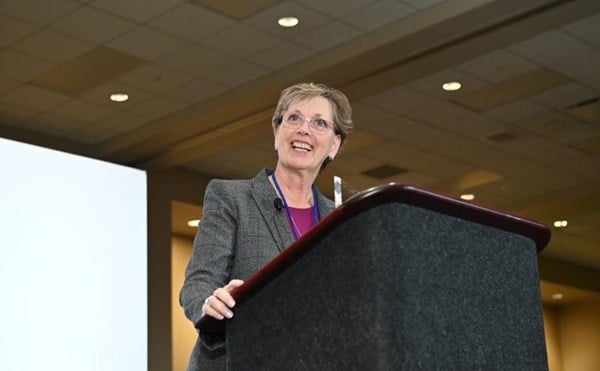
ACEP President Nick Jouriles shares his thoughts on President Obama’s speech to the AMA House of Delegates yesterday
President Obama was warmly received by the physicians at the AMA Annual Meeting earlier today. Like many in the crowd, I went with mixed feelings. Our current system is not sustainable, we all know that. But would he actually speak specifically to some- even one – of the critical issues in emergency medicine today? What are his plans, how will our issues be addressed, and where do we go from here?
For starters, the President told us that he is not trying to create a state run plan. “When you hear the naysayers claim that I’m trying to bring about government-run health care, know this–they are not telling the truth,” Mr. Obama emphasized.
But his plan does have a public component and includes: an emphasis on preventative care, widespread use of electronic health records, and changes in the health insurance industry including a new “exchange” where individuals and businesses can purchase a health plan. That “exchange” includes a government option.
Like many in the audience I was wondering about President Obama’s emphasis on wasteful spending in health care. He does not lay the blame at the foot of physicians, but the constant drumbeat coming from his administration on this issue is unsettling. Can inefficiencies be wrung from the system? Can we streamline some of our processes? Can things be done differently? Yes, yes and yes. But to the tune of hundreds of billions of dollars? I don’t see it. Most emergency physicians don’t see it, and neither will most Americans.
But then, he brought up an issue we can all agree on. I am encouraged that he is open to changes in the medical liability system. That was a position I had not expected from this Administration, and although he does not take a strong position, it is a start. President Obama said, “[W]hile I’m not advocating caps on malpractice awards which I believe can be unfair to people who’ve been wrongfully harmed, I do think we need to explore a range of ideas about how to put patient safety first, let doctors focus on practicing medicine, and encourage broader use of evidence-based guidelines. That’s how we can scale back the excessive defensive medicine reinforcing our current system of more treatment rather than better care.”
Like I said, a start.
We will also have to look long and hard at proposals affecting the physician payment system. In addressing the issue, Mr. Obama said, “We need to bundle payments so you aren’t paid for every single treatment you offer a patient with a chronic condition like diabetes, but instead are paid for how you treat the overall disease.”
How that plays out for emergency medicine will be key, but given our 25 year history with EMTALA, where many hospitals receive extra funds for indigent care while we do not , his emphasis on this is not a good sign.
Finally, it was disappointing not to hear emergency medicine mentioned specifically. We saw how our emergency departments were affected with the “worried well” of H1N1. And the New York Times published my letter to the editor addressing that point. But the White House has hit the mute button for now- or until the next epidemic or natural disaster occurs- regarding the crisis in emergency medicine.
It was a good speech and a good start. It was great to be in the audience. Now it’s time for Congress to get down to business and find solutions that we can all believe in. And time for the nation’s emergency physicians to stand up and make our voice heard. Our patients need us.
Starting “The Central Line”
Posted by acepwebmaster in TheCentralLine.org on May 5th, 2008
Welcome to emergency medicine’s newest blog site, TheCentralLine.org. Hosted by the American College of Emergency Physicians, this site will include the opinions, ideas and experiences of emergency physicians.
Right now, health care reform is the hot topic, and on April 22, 2009 more than 400 ACEP members will go to Capitol Hill during the Leadership and Advocacy Conference to lobby their members of Congress. This site will cover that conference and report on the activities and responses of those attending, as well as the statements and positions of the policymakers and legislators who are scheduled to attend. Several emergency physicians will also join the site and tell their stories first hand.
Join us and make The Central Line part of your daily blog experience.